Working on a Dream


∙Leadership

∙Theology

∙Life


Tuesday, August 6, 2013

Are you a Good Girl?

Are you a good girl?

I recently read this very short, yet effective illustration that I just had to share with you.
The strength lies in its simplicity.  
I think you'll agree after you read this that it will be something you will want to pass on. Maybe you have a daughter that could use this advice or perhaps you are a leader and want to influence a group of young ladies with this enduring message. 


"Good Girls are Like the Apples on the Top most part of a Tree. While the Bad girls are the Apples that Have fallen Down and Rotten. So, Most Guys are Soo Lazy to Climb all the way to the Top to get the Good Girls, So, they tend To pick on the Bad girls, (rotten apples) down. 

Those Girls (Apples) on top, sometimes think that there is Something Wrong with them, Because the ones which are rotten, (bad ones) are picked Easily Leaving them waiting on top.
So the ones on top Decide to fall, hence Becoming Bad and rotten. So, Ladies be Patient, the Right guy will not Be tired to Climb All the way to the top ...  And Get you."

Above, there are two important truths to grasp.  
The first is obvious, a girl should know her value.  The story above does a fantastic job at illustrating this. The other truth is not as evident, it is implied, but never stated overtly. The other gem hidden in this striking illustration is when a girl chooses to stay at the top of the tree, she will by default ward off all the low-hanging low-life's. 

The Bible teaches us in the book of 2 Corinthians (6:14), "Do not be yoked together with unbelievers. For what fellowship can light have with darkness?" The key to unlocking this passage is in the word, "yoke."  A yoke (I know you envisioned the yellow-y center of an egg) is a tool used by farmers. It hitched two strong bulls together so they could plow fields in perfect unison. The reason the Bible tells a person to not be unequally yoked, is the same reason you would never hitch a Strong bull with a Wimpy donkey. 
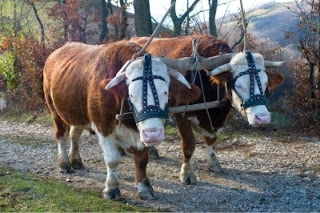


The plow lines would soon become terribly crooked due to the strength of the mighty bull overpowering the sad donkey. 


Let's circle back to our original illustration. 

When a girl stays at the top of the tree, she keeps her standards high, thus eliminating all the bad boys that will not match her own intrinsic quality. In reality, just by her position alone she will have eliminated a good 90% of rotton apples. 

The takeaway is that in relationships you ought to seek a spouse with similar values, morals and ethics. So hear this ladies, and hear me loudly; never compromise your position on the tree. Because one day, God will position another apple on another branch that fits your core beliefs ... 
And when He does, you just found your perfect applesauce. 

Saturday, August 3, 2013

Anthony's Favorite Poem: The Man In The Glass

When you get what you want in your struggle for pelf,
And the world makes you King for a day,
Then go to the mirror and look at yourself,
And see what that guy has to say.

For it isn't your Father, or Mother, or Wife,
Who judgement upon you must pass.
The feller whose verdict counts most in your life
Is the guy staring back from the glass.

He's the feller to please, never mind all the rest,
For he's with you clear up to the end,
And you've passed your most dangerous, difficult test
If the guy in the glass is your friend.

You may be like Jack Horner and "chisel" a plum,
And think you're a wonderful guy,
But the man in the glass says you're only a bum
If you can't look him straight in the eye.

You can fool the whole world down the pathway of years,
And get pats on the back as you pass,
But your final reward will be heartaches and tears
If you've cheated the guy in the glass.

Monday, July 29, 2013

Is your Church ready for this?


Below is a summary of the helpful book, "No Perfect People Allowed" by John Burke. In the book, Burke exposes the 5 hurdles facing the Church and offers insight as to how the Church can bridge the gap and become more effective at reaching out.

Enjoy!

The church is facing its greatest challenge—and its greatest opportunity—in our postmodern, post-Christian world.  God is drawing thousands of spiritually curious “imperfect people” to become his church-but how are we doing at welcoming them?

The postmodern experiment has made Christianity and the church in America very messy. We’re dealing with the fallout of the sexual revolution, drugs, new worldviews and more. Therefore, the 5 main issues emerging generations are dealing with are: Trust, Tolerance, Truth, Brokenness, and Aloneness.

Trust – We must create a culture in our church that recognizes the incongruence in our lives. Address our hypocrisy and correct it. Encourage and create dialogue about difficult issues. Let go of the churchy facades and create a culture of authenticity.

Tolerance – Accept people as they are, but create a system for spiritual growth. There are two litmus test questions for postmoderns – “What do you think about other religions?” and “What do you think about gays?” What people are really asking is “Are you arrogant with what you believe?”.

Truth – While we know that we have truth, we need to be humble with our knowledge. Postmoderns don’t care about what we know. We need to introduce them to who we know. Jesus is Truth. We don’t just know the information of truth, we knew the person of Truth. We must then encourage new believers to share their newly discovered Truth with their friends and family.

Brokenness – People are hurting for all kinds of reasons. We must create a culture of hope so they can see the light at the end of the tunnel. In dealing with sexual wholeness, Burke presents the idea of first practicing mental monogamy. The idea is to first fully understand all of the right reasons to remain abstinent before marriage. He presents the whole package on the issue, and it’s great. Finally, we must create a culture of healing. If you can tell by now, the issues and culture creation are building upon each other, and this progresses until the end of the book.

Aloneness – People are lonely. We find ways to escape, whether it is alcohol, porn, drugs, whatever. In the church, we must create a culture of connection that allows people to be authentic and vulnerable. We can only find true intimacy with others when we are authentic and vulnerable. This must first be modeled by the Pastor and pastoral staff. Through small groups, we can then create a culture of family.

What do you think? Is there anything missing?
Would you add anything?

Tuesday, July 23, 2013

Part 2: How to deliver a Rockem' Sockem' Speech


I trust that you picked up some helpful tips in my last post about delivering a great public speech; hopefully you had a chance to implement the suggested concepts and your speaking has improved.

Today, I'll share more Rockem' Sockem' pointers that will enable you to improve even more as you become a person of influence.

Rockem' Sockem' Tip #4 Framework & Transitions:
The old adage: tell the audience what you are going to tell them, tell them, and then tell them what you told them is a type of framework. A framework is basically a blueprint of how you want your speech to go.  When I delivered the "4 D's of a Dynamic Daddy" sermon, I used a simple approach: The framework was 4 moves where I emphasized each of the 4 points at a time. 
Point 1: A Dynamic Daddy lovingly Disciples his children.
Point 2: A Dynamic Daddy will give wise Direction to his children.
Point 3: A Dynamic Daddy sets the Destiny for his children.
Point 4: A Dynamic Daddy has to make a Decision to live out his calling.
After each point, in this case the "D", I would smoothly transition in to the next point.  There are two things to remember about transitions:
A) You need them.
B) You need to think about them before you are standing up in front of people speaking.
Your transitions will be the food you dangle in front of your starving audience's mouths.  It leaves them on their toes and will keep them interested.  In my case, the transitions I used went something like this: "A Dynamic Daddy that lovingly disciplines their children will by default set the destiny for them..." Simple.
I accomplished 2 things here. The first is I let everyone know that my initial point was finished, and secondly I informed the congregation of my next point that I would emphasizing.

Rockem' Sockem' Tip #5 End Powerfully:
As you come to the end of your speech, you should alert your audience that things are about to draw to a close. This will heighten your audience's attention again. You can use simple language like: "As we conclude" or "You are about to leave this place and enter the world, before you do, remember ... "  This is your time to inspire! Leave them with something that will force them to talk about your speech.  My goal is to have my sermon being discussed at the dinner table later that night. And I do not mean in the sense of, "What was that sermon all about anyway???" Also, it is during your conclusion that you will tack on your central theme / catchphrase.  By doing this, you will re-emphasize your main idea. 
NOTE:  Your conclusion is your conclusion.  There is nothing so irritating to your audience like when you conclude 57 times or when you feel the need to introduce new information at the very end.  Just close. Then find your seat. 

Rockem' Sockem' Tip #6 Bring things to Life:
This means illustrations.  Too often the speaker uses dry, boring illustrations like stats and graphs.  Please, please, please do not do this to your people.  If you have a statistic that you are using, use an illustration to bring that stat to life.  Chip and Dan Heath, in one of the best books that I read in the past few years, "Switch", teach a concept called the "Elephant & the Rider."  The basic premise is that each of us is built like a man riding an Elephant.  The Rider is rational.  He likes maps, flow charts, etc. The Elephant is emotional.  He is easily scared and really powerful.  When delivering a speech you must keep in the forefront of your mind that the people in your audience need to have their Rider directed and their Elephant motivated.   This means that you need to incorporate rationality and emotionality. 
People are both.  So your speech needs to include both.

Here is how I utilized this a few months back:
During my ordination, I did a lot of reflecting.  One of the things that I just could not shake was how many things I had started and ended over my life, but the one thing that remained constant was God's faithfulness.  I reflected about the times I tried teaching myself guitar, the times when I'd go fishing, the baseball / football  teams I signed up for -then quit. And then there was that stint when I thought I was golfer... The list continued to swell the longer that I reflected.  On the day of my ordination ceremony,  I wanted to communicate this truth to the congregation, so instead of talking about it, I arrived early with a box full of objects. Each object representing a thing in my life that I started, then eventually quit or became disinterested in.  I spoke about each object briefly, one at a time, going through them all in about 5 minutes.  Then, I walked into the heart of the church and said that there is One who remains faithful, more faithful than any brother or sister.  His name is Jesus and that is why I can stand here before you all today.
I then quoted Psalm 73:25-26:
"Whom have I in heaven but You?
And besides You, I desire nothing on earth.
My flesh and my heart may fail, but God is the strength of my heart and my portion forever."
I chose to communicate this way because I wanted to touch peoples minds AND hearts. I not only talked about the areas in my life that no longer remain, I put them on display.


This ends part 2 of our 3 part series on how to improve your speaking abilities. Please come visit www.dreamingnorth.blogspot.com for the powerful conclusion later in the week!

Science Of Persuasion